

“AI Disruption” Publication 10,400 Subscriptions 20% Discount Offer Link.
From being acquired by Meta to undergoing review, the once-star product Manus has faced continuous twists and turns this year—until today, when the other shoe finally dropped: Manus is about to resume operating as an independent company.
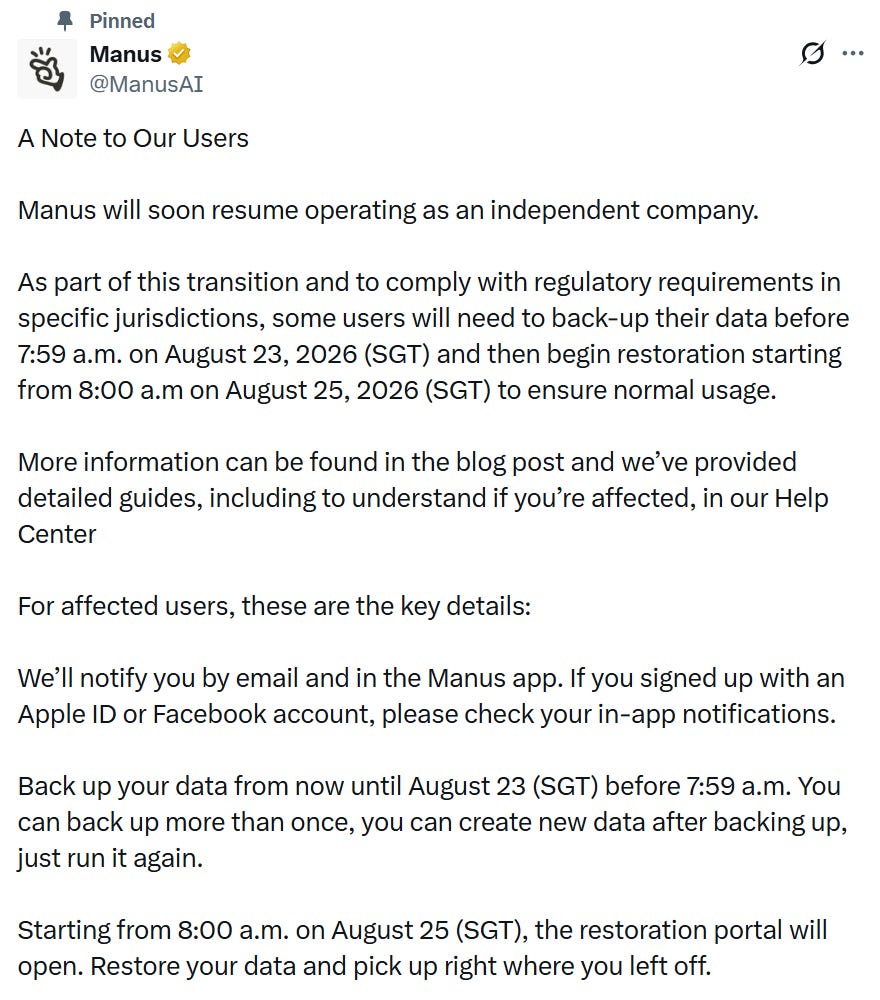
Before returning to startup mode, we had already been observing this “butterfly” in the storm, especially the Manus product itself: amid a series of external upheavals, its iterations, features, and form have continued to evolve quietly.
Only this time, it can no longer stir up the same massive waves as before. The momentum to define a new category requires a scarce window of time—one that can only be waited for, never predicted.
If you’ve almost forgotten about this product, or if you want to know what changes and additions it has made, today is the perfect time to revisit this article.
A butterfly flapping its wings can trigger a storm on the other side of the Pacific—that’s the explanation of the “butterfly effect.” In the AI industry, the “butterfly effect” is best known because of a company by that name, which launched Manus.
The emergence of Manus was once the first highlight moment for Agent-class products. With its unique engineering thinking, it sparked what could be called a frenzy of pursuit and also triggered unprecedented controversy. The biggest controversy arose after it was acquired by Meta for $2 billion.
On April 27, 2026, China’s National Development and Reform Commission ordered Meta to unwind its acquisition of Manus, and this $2 billion deal came to a halt.
Three days later, Manus’s official Twitter account posted an update—not an announcement about the acquisition, nor details about the deal being split, but rather:
