

“AI Disruption” Publication 9100 Subscriptions 20% Discount Offer Link.
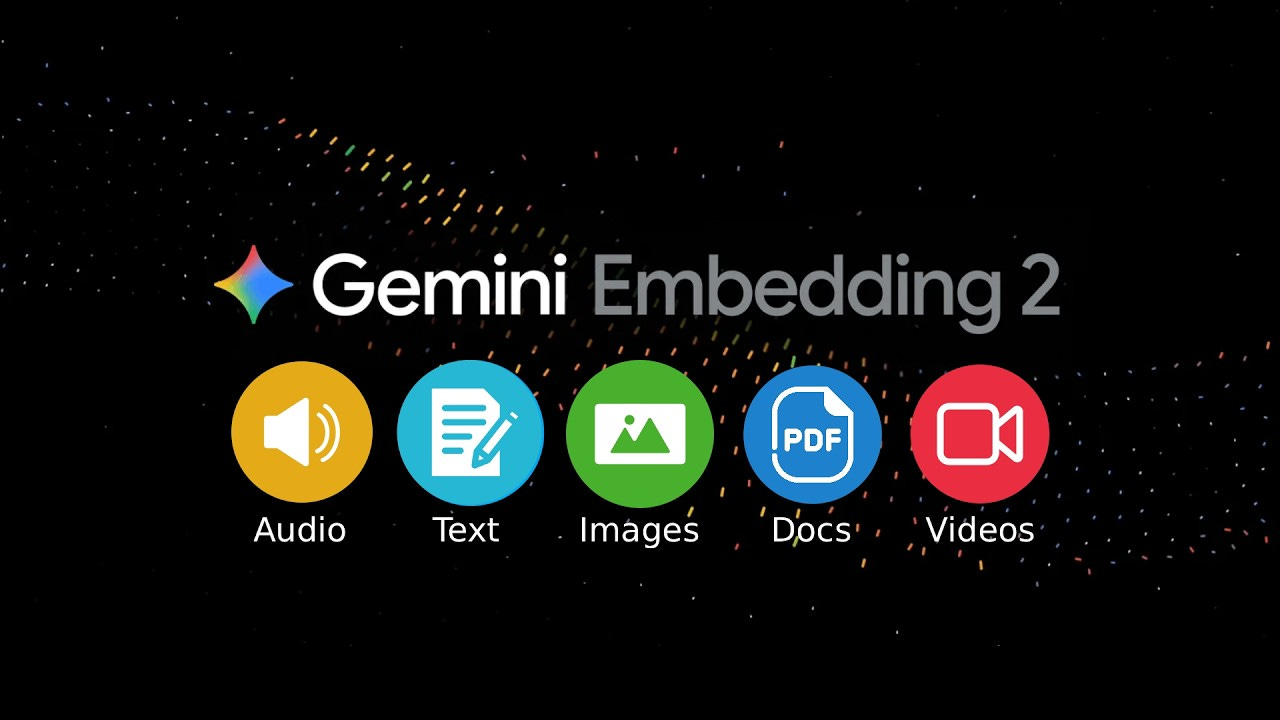
If you’re building a RAG system or your business involves multiple content formats such as images, videos, and audio, this article is worth 10 minutes of your time.
On March 10, Google released Gemini Embedding 2. This isn’t just another “bigger and better” large language model — it’s an embedding model that tackles what appears to be a foundational problem in AI systems, but is actually the most critical one:
How do you get a machine to understand whether “this piece of text” and “that image” are talking about the same thing?
Previously, text had to be processed by text models, images by image models, and audio had to be transcribed to text first. If you wanted a system to simultaneously understand text, images, and video, you’d have to build an entire complex pipeline to align the outputs of different models together.
Gemini Embedding 2’s approach is this: take five modalities — text, images, video, audio, and PDFs — and map them all into the same vector space. Done in a single API call.
