

“AI Disruption” Publication 10000 Subscriptions 20% Discount Offer Link.
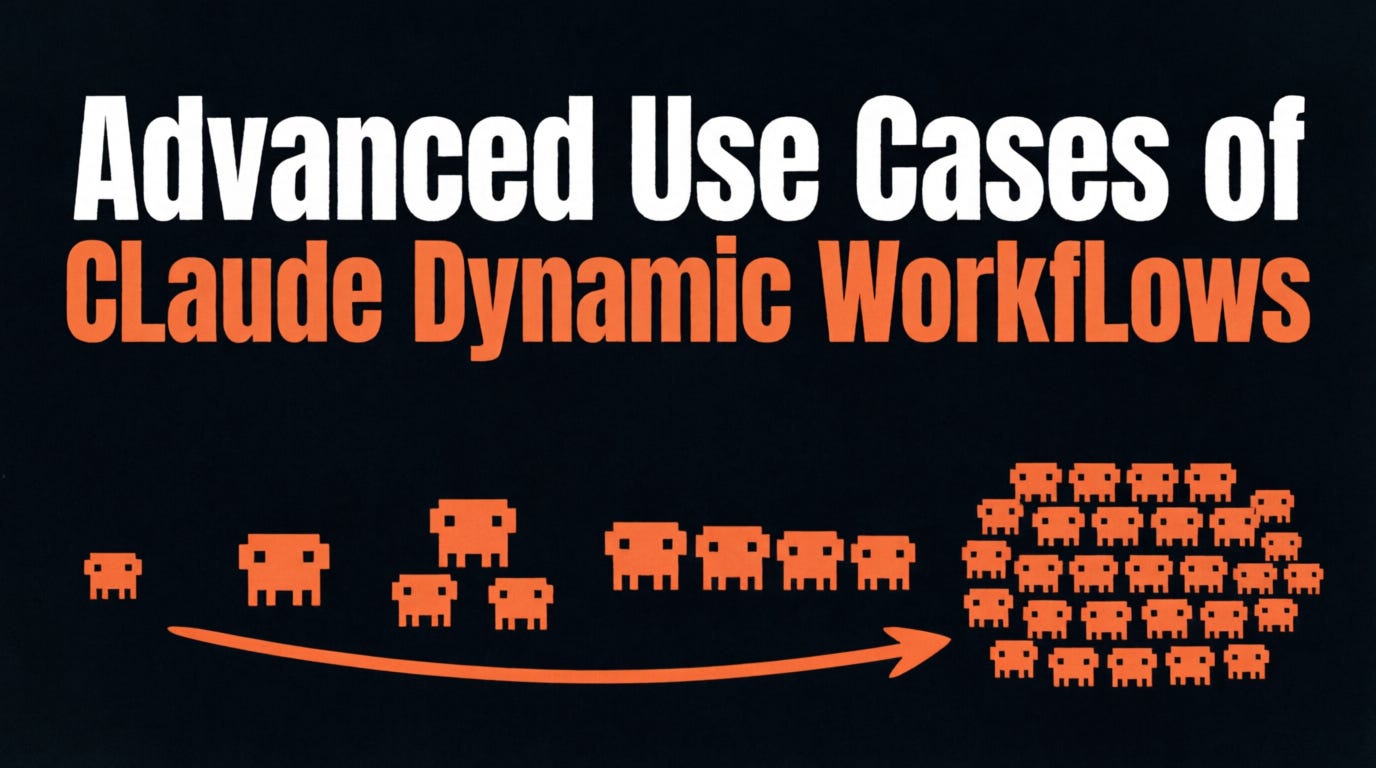

If Skill equips an Agent with a single tool, then Dynamic Workflows is like giving the Agent an entire construction crew.
Dynamic Workflows represent a higher-dimensional application of Skills.
We have Skills for writing code, Skills for researching information, and Skills for generating documents.
A Skill is essentially a capability module that solves a single-point problem.
For example: how to generate a report, how to analyze a piece of code, how to call a specific API, or how to output content in a fixed format. Skills are very useful, but at their core, they are still individual toolboxes.
Truly large tasks don’t just lack one tool — they lack an organized system.
Take refactoring a large project as an example. The challenge isn’t simply “have the AI edit the code.”
You need to first scan the project structure, assess risks, break down modules, design a migration sequence, have different roles review the architecture, security, performance, and testing, and finally have someone merge all the results into an executable plan.
At this point, Skills are no longer enough.
The problem has evolved from “Can the AI do this specific thing?” to “How do we organize a group of Agents to complete a complex task in sequence, by role, and by stage?”
